Wednesday, June 29, 2011

Going big with Westmalle Trappist ale

Trappist beers sure do get a lot of respect. Beers like Chimey and Rochefort are some of the most highly regarded in the world. Among the rare few beers that can call themselves Trappist beers is Westmalle Abbey and their famous Westmalle Tripel. It may look like an approachable beverage (click the photo at left for a larger version), but make no mistake, this is a BIG BEER.

Tripels (sometimes spelled "trippel") are an acquired taste, and this one is no exception. Looks light and fluffy and drinkable, but one gulp and you realize it's a sipper.

A common misconception with beer is that color tells you how "heavy" it will be. People think dark beer = thick beer or heavy beer, but that just isn't the case. For example, Guinness is a low-alcohol beer with about the same calories and alcohol content as Miller Lite, Bud Light, etc. So while Westmalle Tripel looks light, it drinks like a lead weight, with lots of body and a robust 9.5% ABV alcohol content.

The taste is sweet but not cloyingly so, a touch spicy but not in your face. The beer lacks all the dark fruit flavors of Belgian darks, but does have lighter fruits in the aroma. They're especially noticeable as you let the beer ease into warmer temperatures. Dominant is a "bready," almost pastry-like taste. The beer has very active carbonation -- all that head in the photo was generated with a gentle pour -- and foams up quite a bit in your mouth. I drank this while eating a pasta dish with a mild cheese and the beer completely overpowered the food despite a very clean taste.

Excellent beer, but you know what? I'm going to piss off the hardcore beer folks when I say I like American tripels better than this one. It's sacrilege, I know, but the aggressive hopping of beers like Flying Fish's Exit 4 are more appealing to me, adding balance to the weight of a big beverage like this. They're Americanized, highly hopped, very spicy, robust, full of flavor. And, for me, more desirable.

No, you're not supposed to say that about one of the most praised beers in the world -- BeerAdvocate rates it an A-, a notch over the B+ for Exit 4 -- but there it is.

Which isn't to say you shouldn't give it a try if you spot one and enjoy Belgian styles. It'll run you about $5 to $6 for the bottle, but the cost of entry is worth it because you'll experience a heady, challenging beer unlike most you'd normally be drinking.

Thursday, June 9, 2011

100 years ago today, the violent activist who helped kickstart Prohibition died

Carrie Nation was, shall we say, an exuberant woman. She was a key figure in the Temperance Movement, which paved the way for one of the most idiotic laws in American history, the Volstead Act. With it came Prohibition -- along with murder, organized crime, corruption, and other fun pastimes.

Mrs. Nation wasn't merely against alcohol. She believed in violent protests. She was known for raiding bars with a hatchet, leading groups of women inside to smash the place to pieces. That's right, a hatch-wielding old lady who roved the country chopping up taverns because damnit, people shouldn't drink. Surely she was a joy of a woman.

Today, 100 years ago, she keeled over before having a chance to see her dreams of prohibition become reality.

How sad.

Wednesday, May 25, 2011

Fresh from my fermenter, an oatmeal stout

I've posted about homebrewing before. Here's a brew that I think turned out pretty good and should turn out even better after a few adjustments for my second batch. Introducing Old Kicker Oatmeal Stout, brewed with cocoa and coffee:


Old Kicker has a lively carbonation like Samuel Smith's Oatmeal Stout, with a taste of cocoa in the middle and then the lingering bitterness of coffee.

I can't take full credit for it, though. The recipe isn't fully my own concoction. It began with an oatmeal stout recipe from the fine folks at Brewer's Apprentice. I then added two scoops of cocoa during the boil, one with about 30 minutes left in the boil and another in the last five minutes. For my second batch I'll be adjusting that upwards, adding one to two more scoops of cocoa so the taste is more pronounced. Both will come in the last five minutes; I'm afraid that early dose may have boiled away some desirable cocoa aroma.

My other addition was coffee. For those who don't homebrew, here's how it works: When you bottle your beer you add something called finishing sugar as you bottle it. The yeast wakes up and eats it, producing CO2. Since the beer is now in a bottle, the CO2 has nowhere to go, and this stays inside the bottle. That's how your beer carbonates. (And YES, if you add too much sugar the yeast will generate too much CO2 and your bottles will literally explode. It can be dangerous.) Generally you boil the finishing sugar with a small amount of water before adding it to the fermented beer.

But with Old Kicker, I used coffee instead of water. Amazingly, I only used about 3/4 a cup of coffee for a five-gallon batch, yet you can still clearly taste it in the beer. It's a touch on the astringently bitter side for my taste, so next time I'll be cold brewing the coffee to provide a smoother coffee flavor without the bitterness.

Finally, I'll be adding a small amount of lactose sugar. Lactose is a sugar that beer yeast can not ferment. Adding it will do one thing: add body, making the beer taste and feel "fuller" and heavier.

The results will be, I hope, a delicious chocolate oatmeal stout with coffee. The first batch was pretty tasty (and there is still plenty left). Hoping the second will be delicious.

For those interested in trying to brew Old Kicker, start with this stout recipe (PDF warning) and adjust as per this post. Experiment a bit to make it your own.

Monday, May 23, 2011

Tasting some history with Rochefort's Trappist beers

Note: This post originally appeared on my main blog.

For centuries, Trappist monks have been known for their outstanding brewing abilities. Monks in Belgium brew beer not only for their own consumption -- they are hearty, healthy beers -- but in order to pay for their way of life. Some of these beers are among the most sought after in the world, most notably beer from Westvleteren, which can only be purchased at the abby and only in small quantities. Others, like the world famous Chimay beer (brewed at Scourmont Abby), are widely available and are among the world's most praised beers.

Not too long ago, I had a chance to have the three beers of the Rochefort Brewery, one of the only seven true Trappist breweries in the world. This beer has been in production since 1595. So yeah, it's a piece (delicious) history.


Rochefort makes three beers, simply called 6, 8, and 10. They're relatively similar in style, with increasing levels of alcohol (from 7.5% ABv to 11.3%) and complexity being the major distinguishing factors. These beers are consistently among the top ranked beers in the world. Do they live up to the hype?

Absolutely.

Pouring the 6, the first thing you notice is the gorgeous color. It's closer to a deep orange brown than you see in the picture above, not unlike a forest floor in autumn. The 8 is similar, showing the brown of autumn leaves with just a faint hint of red. Not thick black like a porter, not golden brown like a brown ale. Brown like Mother Nature. It's quite beautiful. The 10 is a deep, murky brown with hints of red at the edges but otherwise totally opaque.

All three beers are bursting with carbonation, too. Even with a gentle pour they jump up with two or three fingers of head. So all in all, these beers are wonderful looking.

When I first opened the 6, though, I wondered if they'd meet expectations. I expect a world class beer to have a world class aroma, but at first I felt slightly underwhelmed by Rochefort 6. Maybe it's the big IPAs and Imperial Stouts I've been drinking this winter, almost all of which fill the nose with heady aromas, but this left me unimpressed. Smelled heavy with yeast, very sweet with hints of caramel. Not unpleasant, but also not alluring.

The 8, on the other hand, had an active and complex aroma. Hints of figs and raisins and just a touch of caramelized pears, with the damp, uplifting smell of a forest stream bank in the spring. Yeah, I'm serious. If you can imagine what a walk through old Europe would smell like, well, it smells like this.

The 10 was the most difficult to judge in the aroma department. The aroma is boozy similar to a big barleywine style ale. (Think of Sierra Nevada's Bigfoot.) If you pay close attention you get some hints of figs and caramelized apples, but the big, malty alcohol smell dominates. It's certainly a STRONG aroma. Whether or not it's a good aroma depends on your tastes. As it warms, the aroma mellows a bit, revealing wafts of malt and raisin. Much more pleasant closer to room temperature.

The taste of each was just as complex and nuanced. The 6 got better with each sip. It tasted like a rich pastry bread in beer form, all sorts of bready and malty and delicious. A little sweet but subdued; caramel flavors but in perfect balance with everything else going on in the beer; touches of raisin and the like. By the end what had started as a decent but not mind-blowing beer turned out to be a stunner.

The 8 was more complex and yet oddly more subtle, too. The taste isn't overpowering or explosive. It starts innocuous, a slight gulp of beerish liquid riding on the heady aroma, but the middle quickly broadens into Earthy, vaguely nutty flavors with malt, caramel, molasses, and touches of fig, raisin and plum.

If it's got a fault it's that the 9.2% ABV is more upfront than many crafts manage to accomplish these days. It's not an invisible alcohol. While the Rochefort 6 drinks so smooth it's frightening, you can TELL this one is a big, potent beer. In these days of 10 percenters that drink like they're 6 or 7 percent, I'm sorry to say that this is a minor setback.

With the 10 you get nutty caramel and pumpernickel and other Earthy brown breads in the taste. It starts mild, then expands into a yeasty burst of pleasingly musty flavors before finishing with an alcohol-laden shimmer of mildly sweet breads and dried fruits. Like the 8, it also has a big, strong alcohol taste. A BIG alcohol taste. Many American crafts manage to meet or even exceed this ABV without the alcohol coming to the fore. Not here. Here it wants to arm wrestle you. American craft lovers have been spoiled with easy-to-drink big beers; the Belgians aren't playing that game. This is not for the faint of heart.

(With both the 8 and the 10, I suspect they age WONDERFULLY and will taste less boozy and more complex after a year or so. I'll find out in about a year; I already have a bottle of each stashed away.)

All in all these were incredible beer experiences. They'll run you $5 to $8 a bottle, but if you love great beer it's well worth treating yourself, even if only once.

Friday, May 20, 2011

What's in the fermenter this week

I dabble a little in homebrewing. I'm far from an expert, but it's an enjoyable hobby and I have a good time experimenting with going off-recipe. One of the fun things about exploring beer -- and making it -- is trying something a little offbeat. So with that in mind, last week I bottled three gallons of the stuff inside this bad boy:


You wouldn't be able to tell by looking at the color, but that's a Belgian witbier, aka white beer, similar in characteristics to Hoegaarden. It doesn't look like Hoegaarden, however, because it's been sitting with a few pounds of tart cherries. That's what all the jellyfish looking stuff is. Cherries having their sugars eaten up by the yeast inside the carboy.

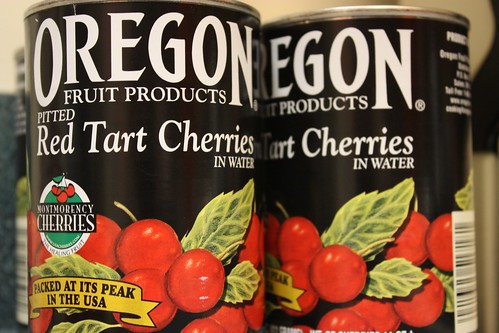
I wanted to use fresh cherries but they weren't in season. My second choice was fresh frozen, but our local grocery store carried every frozen fruit imaginable but tart/sour cherries. Plenty of sweet, no sour. So I settled on a few cans of these:


How does it taste? I have no idea. Only just got it in the bottle and am unlikely to try a taste for at least two weeks. But I think tart cherries will go well with the spiced, tart taste of a Hoegaarden clone, especially when the weather is warm.

I'll give a taste report in a few weeks and, if the experiment was a success, the full recipe. Cheers!