Beer tastings can be fun. Instead of just getting together with some friends to have a few drinks -- hopefully
good drinks -- you're all trying new beers, discussing what you're tasting, offering your impressions, and generally having a nice shared experience. It's not a snobby, aren't-we-refined thing, it's just a good time.
Plus,
beer!
A few weeks ago, I hosted a beer tasting with a fun theme. Over the course of eight beers (in smaller, sample-sized portions, natch, not eight full beers) we took a trip through beer history. Along the way we experienced a wide array of styles and beer experiences. Here are the brews we tasted, in order.
9,000 BC

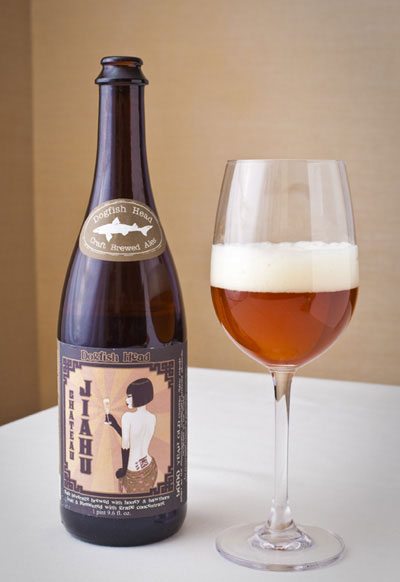
We started 9,000 years in the past in ancient China with a beer based on the ingredients of the oldest known alcoholic beverage, Dogfish Head's
Chateau Jiahu. Going by chemical analysis of ancient pottery, "Dogfish brewers use brown rice syrup, Orange Blossom honey, Muscat grape, barley malt, and hawthorn berry.The wort is fermented for about a month with Sake yeast until the beer is ready for packaging." This beer has strong floral qualities, smelling like a champagne but tasting closer to a lightly malted beverage. Interesting modern twist on what this beverage may have tasted like.
--------------------
740 BC

We then jumped ahead a few thousand years to the time of
King Midas in what is now known as Turkey, where we indulged in Dogfish Head's
Midas Touch. This beer is also brewed with accurate ingredients as per chemical analysis of an archeological dig site. According to Dogfish, this tastes "somewhere between wine & mead; this smooth, sweet, yet dry ale will please the Chardonnay of beer drinker alike." My friends and I likened it to a crisp, somewhat sweet white wine with the feel of a champagne. Definitely an interesting beer that is best served with a meal.
--------------------
The Dark Ages

From there we leapt into the medieval era. Before brewers discovered the
hop plant was great for beer -- beer is the result of sugars fermenting, so in order to be something other than sickly sweet it needs additional ingredients to add bitterness -- they used a mixture of herbs and spices for bittering called "
gruit." It was used for at minimum hundreds of years, possibly thousands, and was a mainstay in medieval beers. When hops came along, hopped beers and gruit beers were at war with one another. Took about 150 years for hops to take over, and pretty much every single beer ever since then has been made with hops. Enter
Steenbrugge Dubbel Bruin. This beer is a Belgian dubbel made with gruit brewed in a traditional medieval style. The beer had many of the characteristics of a Belgian dark beer -- malty, with hints of caramel, figs, and plums -- but the bitterness had a dank, Earthy quality to it. It wasn't my favorite beer of the day, but it was interesting to try it.
--------------------
900 AD

We then moved to 9th Century Finland for traditional Finnish
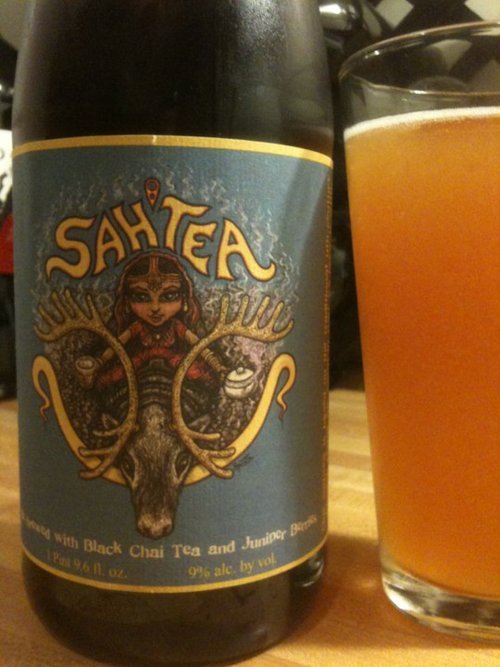
Sahti with a slightly modern twist. Dogfish Head's
Sah'Tea is brewed with juniper berries, along with a tea-like concoction made black tea, cardamom, cinnamon, ginger, cloves, and black pepper. Oh yeah, and it also happens to be heated using white hot rocks dropped directly into the beer. Check the link above and watch the accompanying videos for the interesting story behind this brew. How well did this one go over? Like a champ. It was already one of my favorites. When I mentioned I planned to buy a case of it this year, several of the folks on hand wanted to split it with me. Needless to say, it went over well.
--------------------
1595

Our next stop was Belgium circa the 1500s for a Trappist beer that has been brewed continuously for centuries. I've already
blogged extensively about the great beers from the Rochefort brewery, so I won't repeat myself here. Instead I'll just say that this essential stop on our journey through the history of beer was as delicious as the first time I had it.
--------------------

1776
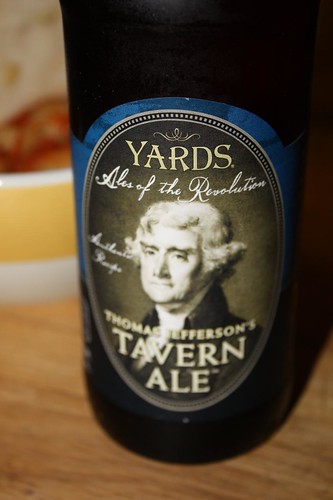
For our final beers, we hopped across the pond to pay a visit to the Founding Fathers with some beers brewed from their original homebrew recipes -- including ingredients grown on Jefferson's estate. All three were from Yards' Ales of the Revolution series, which includes
George Washington's Tavern Porter,
Poor Richard's Tavern Spruce Ale, and
Thomas Jefferson's Tavern Ale. The porter was hearty and rich, with touches of molasses and a hint of chocolate flavor. Very delicious. The tavern ale was a potent (8% ABV) golden ale with a full body. Tasty stuff. And the spruce ale tasted like a Christmas tree. I'll not be drinking that one again.
And that was our little jaunt through beer history. It was a fun day of seeing just how varied beer can be. Later this summer, we'll be tackling an array of Belgian beers, focused on Belgian whites and golden ales. Should be fun!